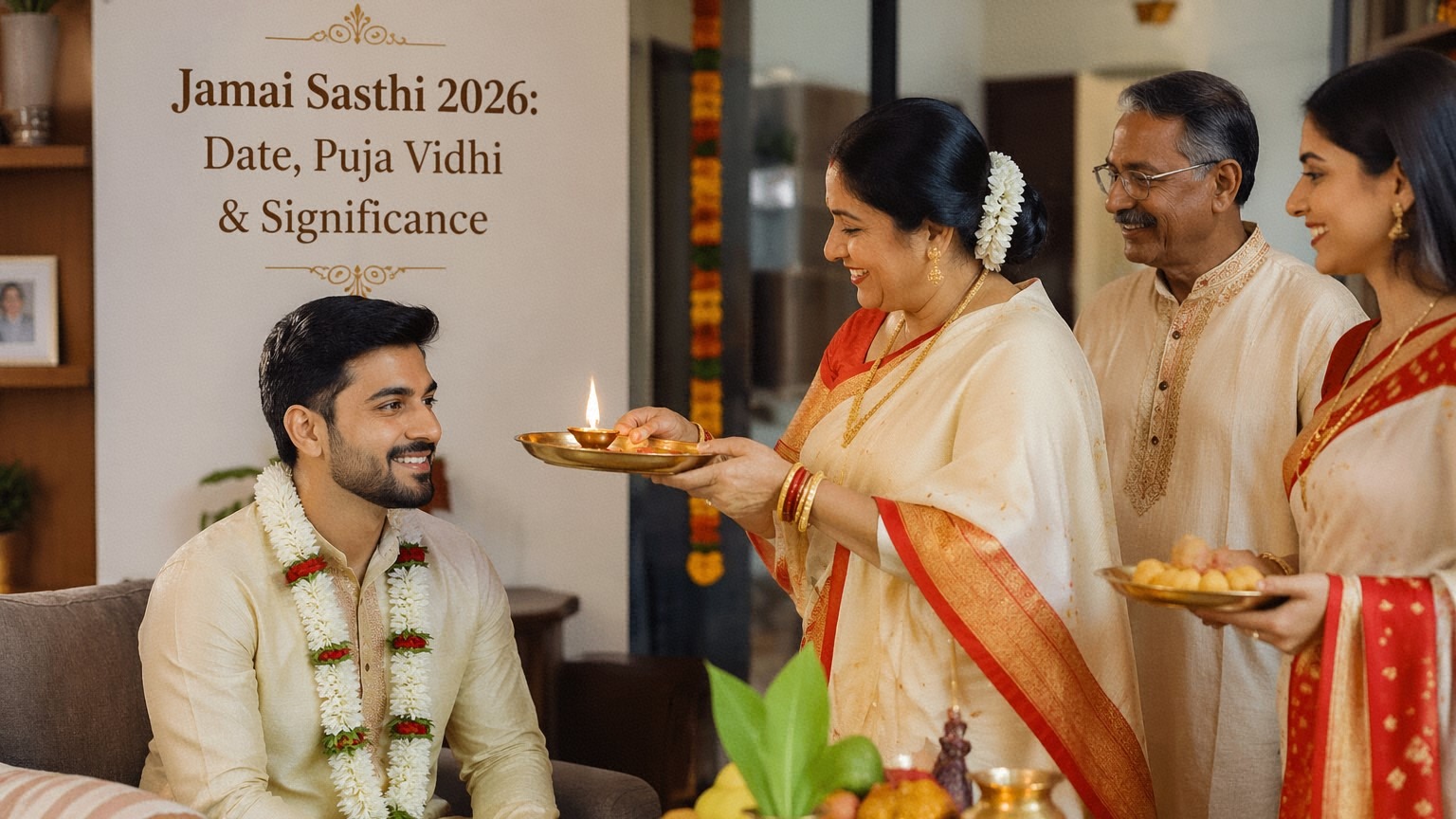
Jamai Sasthi is a special Bengali festival that celebrates the beautiful bond between a son-in-law and his in-laws. Families come together to share love, blessings, and traditional food, making this occasion full of warmth and happiness. As Jamai Sasthi 2026 approaches, many people are looking for details about the date, rituals, and spiritual meaning behind this cultural celebration. Understanding Jamai Sasthi can help families prepare better and enjoy the festival with joy and tradition.
The celebration of Jamai Sasthi is deeply connected to family values and Bengali heritage. From traditional puja rituals to special meals prepared for sons-in-law, every part of this festival carries emotional and cultural importance. If you want to know the Jamai Sasthi 2026 date, Puja Vidhi, and significance, this guide will help you explore everything in a simple and easy way. Celebrate Jamai Sasthi with knowledge, tradition, and the spirit of togetherness.
When is Jamai Sasthi 2026?
The word Jamai means son-in-law, while Sasthi refers to the sixth day of the lunar cycle. Because of this, the festival celebrated on the sixth day of the Jyeshtha month is known as Jamai Sasthi.
Every year, Jamai Sasthi is observed on the Sasthi Tithi of Shukla Paksha during the Hindu month of Jyeshtha. Bengali families wait for this festival to celebrate together and continue a long-standing tradition.
According to the English calendar, Jamai Sasthi usually falls in May or June. In 2026, Jamai Sasthi will be celebrated on Saturday, 20 June.
What is Jamai Sasthi 2026?
Jamai Sasthi is an important Bengali festival celebrated mainly in West Bengal. It is a traditional occasion that honors the bond between a son-in-law and his in-laws.
According to the Hindu calendar, Jamai Sasthi takes place on the Sasthi Tithi of Shukla Paksha in the Jyeshtha month. Families celebrate the day by inviting daughters and sons-in-law to their homes for blessings and festive meals.
On Jamai Sasthi, the mother-in-law warmly welcomes her daughter and son-in-law. Traditional rituals are performed, tilak is applied, and blessings are given for happiness, health, and prosperity.
Many Bengali households celebrate this festival with joy, family gatherings, gifts, and traditional food.
Jamai Sasthi is not only about rituals. It also highlights family values, togetherness, and respect between generations.
Even in 2026, this cultural celebration continues to connect families and preserve Bengali traditions.
Puja Vidhi of Jamai Sasthi 2026
The puja rituals of Jamai Sasthi are simple but meaningful. Families follow traditional customs while praying for blessings and family well-being.
- The mother-in-law wakes up early in the morning and takes a holy bath.
- Sasthi Devi is worshipped with devotion.
- The daughter and son-in-law are welcomed warmly after arriving home.
- Puja items such as water, Durva grass, betel leaf, betel nut, fruits, flowers, and sweet curd are arranged.
- Holy water is sprinkled as part of the blessing ritual.
- Aarti is performed after the puja.
- A sacred tilak is applied to the son-in-law.
- A yellow thread is tied around his wrist for protection and good fortune.
- Prayers are offered for long life, success, and family happiness.
- New clothes and gifts are often presented.
- Traditional Bengali dishes are prepared with care.
- Seasonal fruits like mangoes and litchis are commonly served.
- Families spend quality time together during the celebration.
Significance of Jamai Sasthi 2026
Jamai Sasthi holds special importance in Bengali culture. The festival celebrates relationships, respect, and family unity.
Many families arrange special meals and celebrations to make the son-in-law feel welcomed and valued.
The festival is also connected with blessings for health, happiness, and prosperity. Mothers-in-law pray to Sasthi Devi for the well-being of their daughters and sons-in-law.
Jamai Sasthi represents love, care, and strong family bonds.
The festival also creates opportunities for relatives to gather and spend meaningful time together.
Even today, Jamai Sasthi remains an important cultural tradition that brings families closer.
Special Puja on Jamai Sasthi for Children
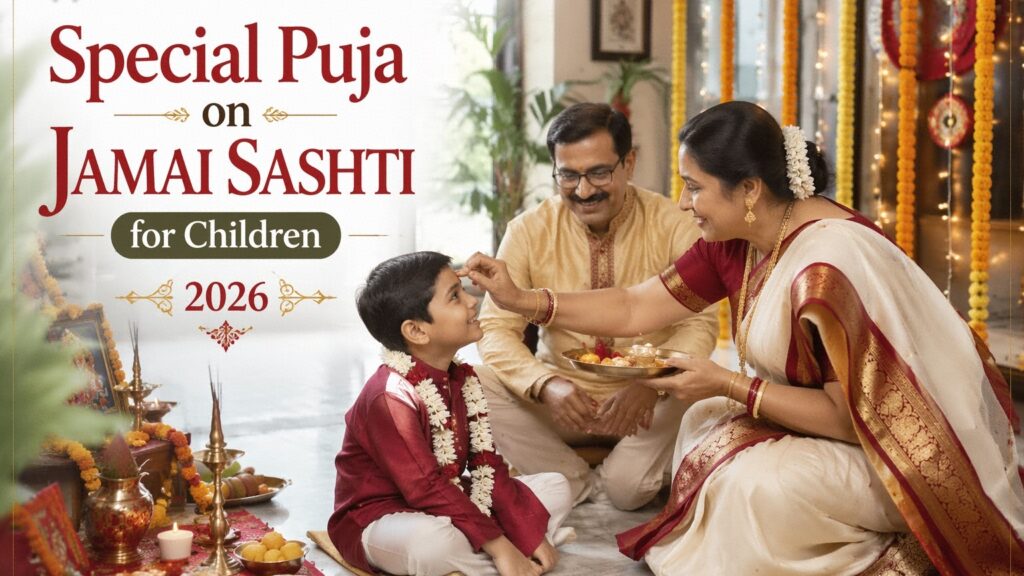
Special rituals for children are also observed on Sasthi Tithi in many families.
Early in the morning, mothers traditionally take a holy bath before performing prayers.
Sasthi Devi is worshiped for the protection, health, and long life of children and family members.
Preparations often begin one day before the celebration.
Traditional puja materials are collected and arranged carefully.
Items like Durva grass, betel nut, black sesame seeds, paddy, fruits, and fresh leaves are commonly used during worship.
Children receive blessings for health and happiness.
Seasonal fruits like mangoes and litchis are shared during the celebration.
Many families also give new clothes to children as part of tradition.
These customs make Jamai Sasthi a meaningful festival centered around family care, blessings, and togetherness.
Mythological Stories Related to Jamai Sasthi
First Story
According to a traditional story, Lord Vishnu once invited Lord Shiva and Goddess Parvati to his home.
However, Goddess Lakshmi did not properly welcome Goddess Parvati because of differences between them.
Lord Shiva became unhappy and cursed Lord Vishnu to leave his home and live a difficult life.
Later, Lord Vishnu took the form of a son-in-law and sought blessings on the Sasthi day of Jyeshtha month.
Through respect and devotion, peace was restored, and Lord Vishnu returned home.
This story is often connected with values of respect, relationships, and gratitude.
Second Story
Another popular story tells about a woman who regularly blamed a cat for food disappearing from her house.
Mother Sasthi, who is linked with the cat, became upset by the woman’s actions.
Later, when the woman gave birth to a child, difficulties came into her life.
Realizing her mistake, she prayed to Goddess Sasthi and asked for blessings.
Her prayers were answered, and happiness returned to her family.
After some years, her parents invited their daughter and son-in-law home on Sasthi day.
Many people believe this tradition later became connected to Jamai Sasthi celebrations.
Preparation for Jamai Sasthi
Families usually begin preparations early to make Jamai Sasthi celebrations special.
Mothers-in-law often buy gifts, clothes, sweets, and festive items for their daughter and son-in-law.
Special attention is given to food planning and family arrangements.
Many households prepare the son-in-law to make the day memorable.
Traditional celebrations combined with modern family gatherings continue to keep this festival meaningful in 2026.
Rituals and Traditions
Jamai Sasthi is celebrated with joy and excitement in Bengali homes.
The day begins with prayers offered to Sasthi Devi.
Family members seek blessings for happiness, peace, and prosperity.
The son-in-law receives a warm welcome with Aarti and tilak.
A sacred yellow thread is tied as a blessing for protection and good fortune.
Food, gifts, and family gatherings remain an important part of the celebration.
Even in 2026, Bengali families continue these traditions with love and pride.
Traditional Dishes for Jamai Sasthi Thali
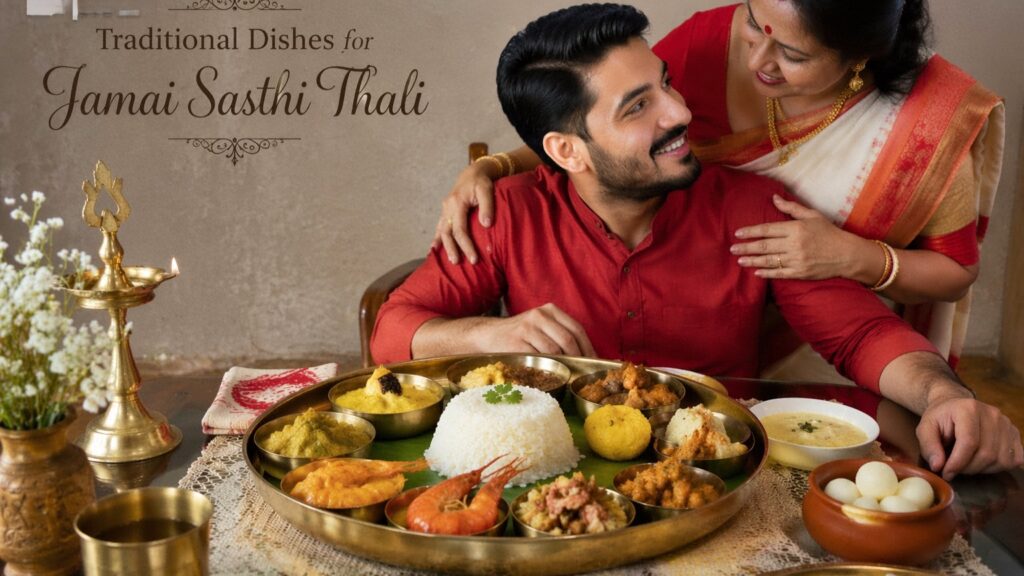
Food plays a special role during Jamai Sasthi celebrations.
Families prepare festive meals filled with traditional Bengali flavors.
A typical Jamai Sasthi meal may include rice, dal, fried vegetables, fish dishes, sweets, and seasonal fruits.
Shukto
Shukto is a traditional Bengali mixed vegetable dish known for its unique flavor.
It is often served at the beginning of festive meals.
Luchi and Aloo Dum
Luchi with Aloo Dum is a popular Bengali combination.
Soft fried bread paired with spicy potato curry makes it a favorite choice.
Ilish Bhapa (Hilsa Fish in Mustard Gravy)
Hilsa fish prepared with mustard gravy remains an important dish during Bengali celebrations.
Many families include it in Jamai Sasthi meals.
Chingri Malai Curry
This prawn dish cooked with coconut milk and spices adds rich flavor to the festive menu.
Juicy Fruits
Seasonal fruits such as mangoes and litchis are commonly served during Jamai Sasthi.
They add freshness and sweetness to the meal.
Mutton Kosha
Mutton Kosha is a slow-cooked Bengali dish prepared with flavorful spices.
It remains a popular festive favorite.
Mishti (Sweets)
Traditional sweets like Rasgulla, Sandesh, Mishti Doi, and Kacha Gola complete the celebration.
A festive Jamai Sasthi meal reflects love, care, family bonding, and Bengali cultural traditions.
FAQs
When is Jamai Sasthi 2026 celebrated?
Jamai Sasthi 2026 will be celebrated on Saturday, 20 June 2026. The festival is observed on the Sasthi Tithi of Shukla Paksha in the Hindu month of Jyeshtha.
Why is Jamai Sasthi celebrated?
Jamai Sasthi is celebrated to honor the bond between the son-in-law and his in-laws. The festival also represents family love, blessings, happiness, and Bengali cultural traditions.
What are the main rituals of Jamai Sasthi?
The main rituals of Jamai Sasthi include Sasthi Devi Puja, applying tilak, tying a sacred yellow thread, offering blessings, and serving special food to the son-in-law.
Which foods are traditionally prepared during Jamai Sasthi?
Traditional Jamai Sasthi meals often include rice, dal, Shukto, Luchi, Ilish Bhapa, Mutton Kosha, sweets, mangoes, and seasonal fruits prepared for family celebrations.
Is Jamai Sasthi celebrated only in West Bengal?
Jamai Sasthi is mainly celebrated in West Bengal and Bengali households, but many Bengali families living in different parts of India and abroad also observe this festival.
Conclusion
Jamai Sasthi is more than a traditional Bengali festival. It is a beautiful celebration of family love, respect, and togetherness. From special puja rituals to festive meals and blessings, every part of this occasion brings families closer. As Jamai Sasthi 2026 approaches, it gives families another chance to celebrate meaningful traditions and create lasting memories.
The cultural importance of Jamai Sasthi continues to remain strong even today. This festival reminds people about family values, relationships, and sharing happiness with loved ones. Whether you celebrate it with rituals, food, or family gatherings, Jamai Sasthi brings warmth and joy that make the occasion truly special.
