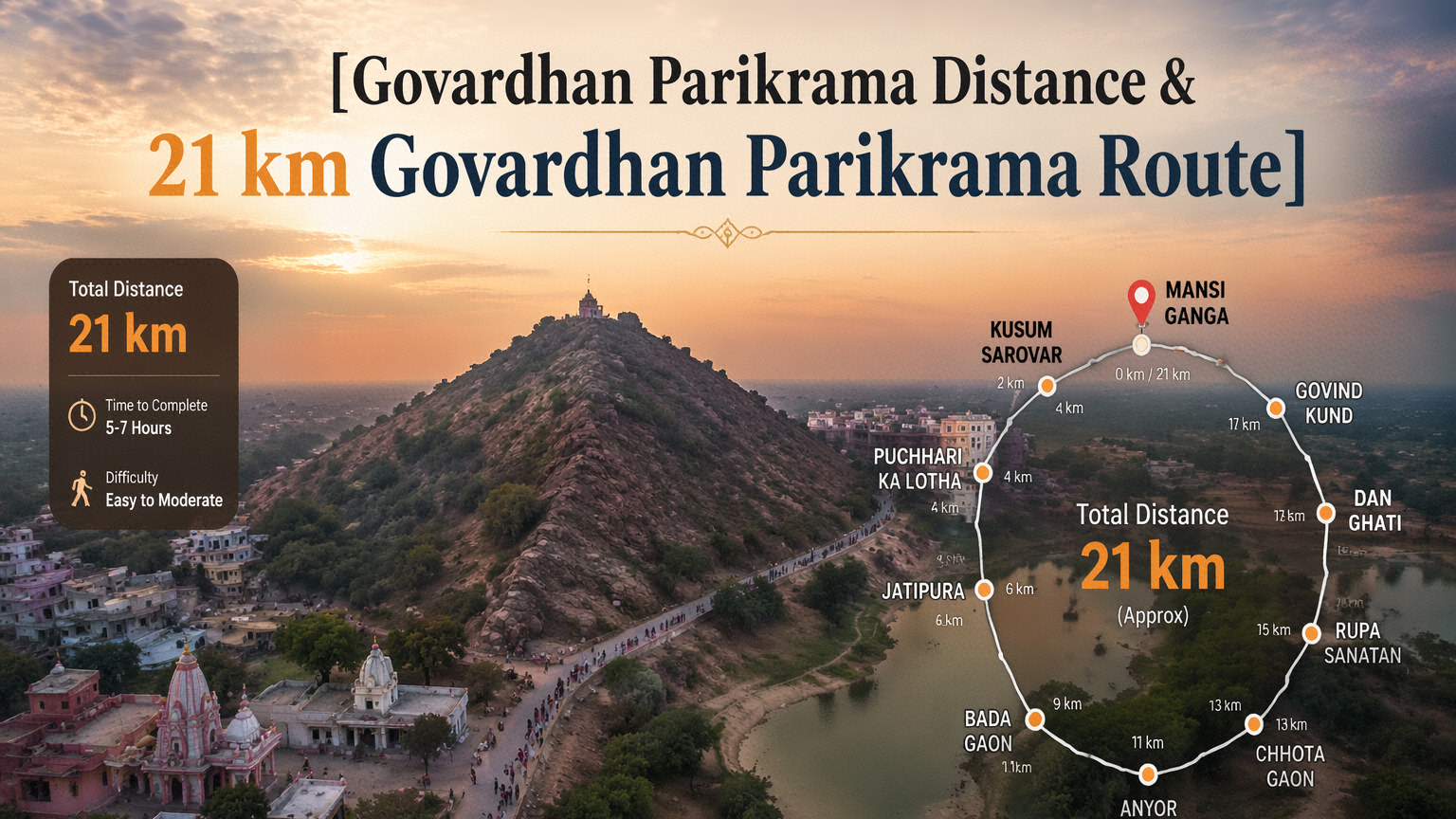
Many devotees search for the exact Govardhan Parikrama Distance before starting this sacred journey because they want to prepare themselves physically and spiritually. Some people feel confused by different answers online, while others simply want a peaceful darshan experience without stress or wrong information. If you are also looking for the real Govardhan Parikrama Distance, you are not alone, because thousands of pilgrims search for the same clarity every year before visiting Govardhan.
This 2026 guide will help you understand the complete Govardhan Parikrama Distance in the simplest way possible, including walking routes, important stops, travel tips, and timing details. Whether you are planning your first parikrama or returning again with devotion, this blog will make the Govardhan Parikrama Distance easier to understand and follow. By the end, you will have clear information, better preparation, and the confidence to complete the holy Govardhan Parikrama Distance peacefully and comfortably.
Why Govardhan Parikrama Is Spiritually So Powerful
Govardhan Parvat is not seen as an ordinary hill by devotees. People believe it is the divine form of Lord Krishna himself. In Hindu scriptures, Krishna is called Giriraj Dharan because he lifted Govardhan Hill to protect the people of Vrindavan. That is why walking around this sacred mountain is considered equal to worshipping Lord Krishna directly.
The 21 km Govardhan Parikrama route takes devotees through many old temples, holy kunds, and spiritual places connected to Krishna’s life. Every stop on the path carries a special story from Krishna’s childhood and Vrindavan leelas. Devotees often say that completing this journey brings peace, faith, and positive energy into their hearts.
Spiritual Benefits of Govardhan Parikrama
Many devotees believe that completing the Govardhan Parvat Parikrama Distance helps remove negative karma and brings spiritual blessings. Hindu saints describe this parikrama as one of the most sacred pilgrimages in India. It is also believed that doing one full parikrama gives the same spiritual reward as visiting many holy places across the country.
People who walk the route with true devotion are believed to receive blessings from Radha Rani and Lord Krishna. The atmosphere around Govardhan Hill feels calm and deeply spiritual. Many visitors also feel mentally relaxed and emotionally peaceful after completing the journey.
For many saints and Krishna devotees, Govardhan Parikrama has been part of their daily worship for years. Chanting Krishna’s name during the walk is believed to increase the spiritual value of the parikrama. This strong spiritual connection is one reason why pilgrims from different parts of the world come to Govardhan every year.
| Spiritual Benefit | Description |
| Sin Purification | Believed to reduce the effects of past karma |
| Moksha | Spiritual freedom from the cycle of rebirth |
| Health & Peace | Helps bring mental calmness and inner peace |
| Divine Darshan | Opportunity to receive blessings of Govardhan |
| Wish Fulfillment | Many devotees believe prayers are answered |
Govardhan Parikrama Distance – Complete Guide with Timings and Variations
Knowing the Govardhan Parikrama Distance before starting the journey can help you plan better. There are mainly two parikrama routes , the longer outer route and the shorter inner route. Both are considered sacred and are chosen by different types of pilgrims based on their comfort and health.
The Govardhan Parvat Parikrama Distance may change slightly depending on the route you select and the number of temple visits you make on the way. Most pilgrims choose the full 21 km traditional route and walk barefoot as a sign of devotion. Elderly visitors and people with health issues often prefer the shorter route for an easier experience.
Total Govardhan Parikrama Distance
The full Govardhan Parikrama Distance of the outer route, also called Badi Parikrama, is around 21 km. The shorter Chhoti Parikrama route is about 11 to 12 km long. Both routes begin and finish near the same area, so first-time visitors usually find the path simple to follow.
The 21 km Govardhan Parikrama route is the most popular and traditional option among devotees. It covers all the major temples, kunds, and important spiritual places around Govardhan Hill. Many pilgrims believe that completing the full route brings greater spiritual blessings.
| Route Type | Distance | Suitable For |
| Badi Parikrama (Outer) | 21 km | Healthy adults and regular pilgrims |
| Chhoti Parikrama (Inner) | 11–12 km | Elderly people, children, beginners |
| Dandawat Parikrama | 21 km (with prostrations) | Highly devoted and experienced pilgrims |
How Much Time Does Govardhan Parikrama Take?
The time needed to complete Govardhan Parikrama depends on your walking speed and how often you stop along the route. Most people finish the 21 km Govardhan Parikrama Walking Time in around 6 to 8 hours. Pilgrims who visit every temple and spend more time resting may take up to 10 or even 12 hours.
Some devotees perform Dandawat Parikrama, where they move forward by full-body prostrations after each step. This is considered one of the hardest and most devotional forms of parikrama. Completing it can take several days and requires patience, strength, and dedication.
Key Factors Affecting Parikrama Time:
- Walking speed , most people walk about 3 to 4 km per hour
- Temple stops , visiting temples and kunds increases total time
- Season , hot summer weather can slow down the journey
- Crowd size , festival days usually bring very large crowds
- Type of parikrama , barefoot walking takes more time than using sandals
- Health condition , older pilgrims may need extra rest breaks
Govardhan Parikrama Route – Complete Guide to Sacred Places and Spiritual Stops
The Govardhan Parikrama Route is filled with ancient temples, holy ponds, and peaceful spiritual places connected to Lord Krishna. Every stop on this sacred path has a special story from Krishna’s life in Vrindavan. When devotees walk with faith and awareness, the journey becomes much more meaningful and spiritually calming.
Before starting the journey, many pilgrims prefer carrying a Govardhan Parikrama map for easy navigation. Although the route is mostly easy to follow, some areas can still confuse first-time visitors. Local guides can also help pilgrims explore hidden temples and lesser-known holy spots during the parikrama.
Starting Point of Govardhan Parikrama
The most common Govardhan Parikrama Starting Point is Mansi Ganga Ghat, located near the main Govardhan town. Many pilgrims begin their journey after taking a holy bath here. Traditionally, the parikrama also ends at the same place, completing the sacred circle around Govardhan Hill.
Another popular Govardhan Parikrama starting point is Jatipura, especially for visitors arriving from the Mathura side. Both starting locations eventually join the same main parikrama path. Pilgrims usually choose the starting point based on their travel route and convenience.
Badi Govardhan Parikrama Route (Outer, Longer Route)
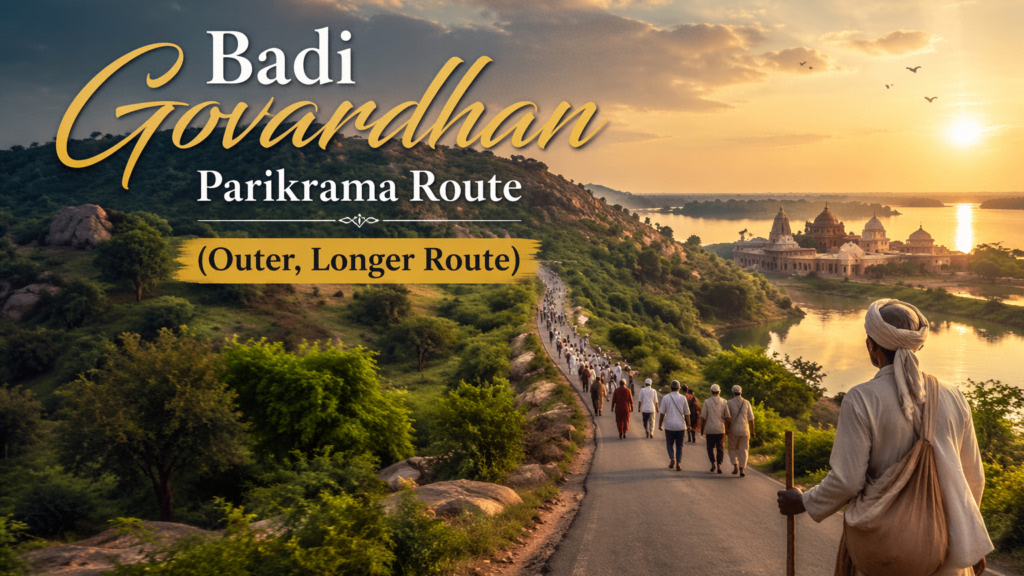
The Badi Parikrama follows the complete 21 km Govardhan Parikrama Route around the outer side of Govardhan Hill. This is the oldest and most traditional route followed by saints and Krishna devotees for centuries. It includes many important temples, kunds, and spiritual landmarks.
During the walk, pilgrims pass through villages, open fields, temple areas, and peaceful roads. Some parts of the route are busy with shops and devotees, while others feel calm and quiet. This mix of surroundings makes the journey both spiritually special and physically memorable.
1. Daan Ghati Mandir
Daan Ghati Mandir is one of the most famous places on the Govardhan Parikrama Route. According to legend, Lord Krishna stopped the Gopis here and playfully asked for tax while they carried butter and milk. The temple is always full of devotion, prayers, and visitors.
The atmosphere at Daan Ghati remains lively throughout the day. Morning and evening aarti here attract large crowds of devotees. Pilgrims who begin their parikrama early in the morning often stop here first for blessings.
2. Sankarshan Kund
Sankarshan Kund is a sacred pond connected to Lord Balarama, who is also called Sankarshan. Devotees believe that bathing in this kund helps cleanse sins and brings peace to the mind and body. The area around the kund feels calm and relaxing.
Many pilgrims sit near the kund for prayer and quiet meditation before continuing the journey. During Balarama Jayanti, this place becomes especially important for devotees. Even though it is less crowded, it is still considered highly sacred.
3. Poonchhri Ka Lautha
Poonchhri Ka Lautha is believed to be the tail end of Govardhan Hill according to ancient stories. It is a peaceful stop on the 21 km Govardhan Parikrama Route where devotees offer prayers to Govardhan Parvat. Many people bow down here with deep respect and devotion.
Compared to other busy temple areas, this place feels quieter and more peaceful. Devotees often spend a few moments here in silence and prayer. Many saints and sadhus also choose this area for meditation.
4. Shri Nath Ji Temple
Shri Nath Ji Temple is one of the most important temples on the entire Govardhan Parikrama Route. The deity worshipped here represents Lord Krishna lifting Govardhan Hill. The temple’s beautiful design and spiritual atmosphere attract thousands of pilgrims every year.
Devotees feel great joy and peace after taking darshan at this temple. The prasad offered here is considered very sacred by visitors. Many pilgrims rest here for some time before continuing their parikrama.
5. Indraman Bhang
Indraman Bhang is linked to the story where Lord Indra accepted Krishna’s greatness after the Govardhan Leela. It is believed that Indra came to this place to ask forgiveness from Krishna after causing heavy storms. This makes the spot spiritually important for devotees.
Pilgrims often stop here to remember Krishna’s protection and divine power. The place carries a peaceful feeling that connects visitors to the ancient story. For many devotees, this becomes one of the most emotional moments of the parikrama.
6. Jatipura Temple
Jatipura is an important village on the Govardhan Parikrama Route and has a well-known temple complex. It is also a common Govardhan Parikrama Starting Point for pilgrims coming from Agra or nearby areas. The temple here is deeply respected by Krishna devotees.
The area has many dharmshalas, food stalls, and resting places for pilgrims. Many visitors stop here to eat prasad and relax during the long walk. Local guides and helpers are also easily available in this part of the route.
Chhoti Govardhan Parikrama Route (Inner, Sacred Route)
The Chhoti Parikrama covers around 11 to 12 km and follows the inner path close to Govardhan Hill. This route is best for elderly devotees, children, and people who want a shorter spiritual walk. Even though the distance is smaller, it still includes many major sacred places.
During festivals and crowded days, many pilgrims prefer the inner route because it is quicker and easier to complete. The path stays very close to Govardhan Hill, creating a stronger spiritual feeling for many devotees. Because of this closeness, many people believe the Chhoti Parikrama feels more personal and devotional.
1. Lakshmi Narayan Mandir
Lakshmi Narayan Mandir is a calm and beautiful temple located on the inner parikrama route. Devotees worship Lord Narayan and Goddess Lakshmi here with great faith. Many pilgrims visit this temple before starting the Chhoti Parikrama.
The temple surroundings are neat and peaceful for prayer. Morning darshan here creates a positive and spiritual beginning for the journey. Pilgrims often receive tilak blessings from the temple priest.
2. Uddhav Kund
Uddhav Kund is connected to Uddhava, the close friend and devotee of Lord Krishna. According to tradition, Uddhava visited this place to deliver Krishna’s message to the Gopis of Vrindavan. Because of this story, the kund holds deep emotional importance for devotees.
The atmosphere around the kund feels peaceful and ideal for chanting and meditation. Many pilgrims spend quiet moments near the water before moving ahead. Some devotees also take a holy dip here as part of their spiritual practice.
3. Radha Kund
Radha Kund is considered one of the holiest places for Krishna devotees around the world. The Govardhan Parikrama Route passes directly beside this sacred pond. Devotees believe that even a small drop of water from Radha Kund carries great spiritual power.
Bathing here during special festivals is believed to bring blessings and spiritual purification. The area is surrounded by temples, ashrams, and saints devoted to Radha and Krishna. Many pilgrims feel this is the most emotional and sacred stop of the entire parikrama.
4. Shyam Kund
Shyam Kund is located beside Radha Kund and is equally important for devotees. This kund is connected to Lord Krishna and his divine pastimes. Taking a dip in both Radha Kund and Shyam Kund together is considered highly sacred.
The two kunds symbolize the eternal love of Radha and Krishna. The peaceful view during sunrise and early morning prayers feels truly unforgettable. Almost every pilgrim visiting the Chhoti Govardhan Parikrama Route stops here for darshan and prayer.
5. Kusum Sarovar
Kusum Sarovar is one of the most beautiful places on the Govardhan Parikrama Route. The large sandstone steps, carvings, and peaceful water make it visually stunning. According to tradition, Radha Rani came here to collect flowers for Krishna.
The gardens and old trees around the sarovar create a calm atmosphere for visitors. Early morning views here look especially magical and peaceful. Both pilgrims and photographers enjoy spending time at this sacred location.
6. Kaan Wale Baba
Kaan Wale Baba is a unique and famous stop on the inner Govardhan Parikrama Route. This small temple is linked to a saint who is believed to listen to the whispered wishes of devotees. People quietly share their prayers near a small opening in the temple wall.
The faith connected to this place is very strong among pilgrims. Long lines of devotees can often be seen here, especially in the morning. Many visitors feel emotional relief after offering their prayers at this special spot.
7. Mansi Ganga
Mansi Ganga is one of the holiest kunds in Govardhan and is believed to be a form of the River Ganga itself. Scriptures say Lord Krishna created this sacred lake through his divine thoughts. It serves as both the beginning and ending point of the Govardhan Parikrama Starting Point route.
Taking a holy dip at Mansi Ganga before and after parikrama is a common tradition among devotees. The area is always filled with temples, devotional songs, flowers, and spiritual energy. Evening aarti at Mansi Ganga, with lamps floating on the water, creates a truly unforgettable experience.
Govardhan Parikrama Timings, Best Season, Rules & Practical Tips
Planning your journey in advance can make your parikrama safer, easier, and more peaceful. Govardhan Parikrama Timing and weather conditions play a big role in the overall experience. Pilgrims who prepare properly are usually able to complete the walk with better comfort and spiritual focus.
Best Time and Timings for Govardhan Parikrama
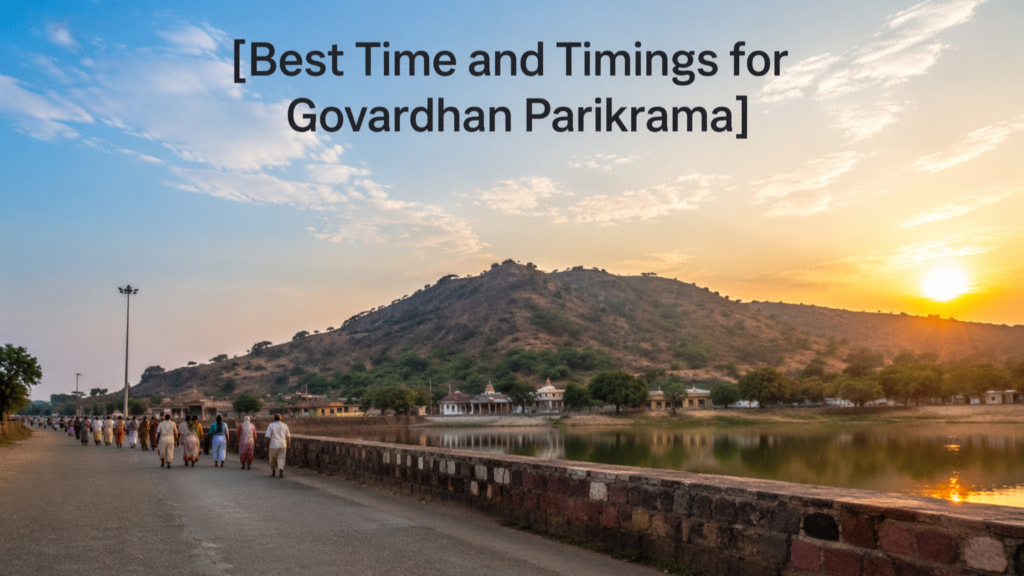
The most suitable Govardhan Parikrama Timing recommended by local devotees is early morning between 4:00 AM and 6:00 AM. Starting before sunrise helps pilgrims avoid strong afternoon heat and crowded roads later in the day. Most people complete the full 21 km Govardhan Parikrama Walking Time by late morning or around noon.
The best months for Govardhan Parikrama are from October to March because the weather stays cool and pleasant. Winter is especially comfortable for long-distance walking. During monsoon season from July to September, the route becomes muddy and slippery, but many devotees still prefer this time for spiritual reasons.
| Season | Weather | Crowd Level | Best For |
| October – March | Cool & Pleasant | Moderate to High | All pilgrims |
| July – September | Humid & Rainy | Low to Moderate | Dedicated devotees |
| April – June | Hot & Dry | Low | Early morning walkers |
| Kartik Month | Cool | Very High | Maximum spiritual benefit |
Important Rules to Follow During Govardhan Parikrama
- Always walk barefoot , wearing footwear on the sacred route is considered disrespectful
- Walk clockwise only , devotees do not walk in the opposite direction on the parikrama path
- Stay peaceful while walking , avoid loud talking, music, or unnecessary noise
- Eat only vegetarian food , the Govardhan area is treated as a holy vegetarian zone
- Avoid leather items , leather belts, wallets, and shoes are generally avoided by pilgrims
- Respect Govardhan Hill , avoid climbing or touching the hill carelessly
- Keep the route clean , do not throw plastic bottles or garbage on the path
- Wear simple clothes , modest and comfortable clothing is preferred during parikrama
Practical Tips for a Smooth and Safe Govardhan Parikrama
Carry enough drinking water before beginning the walk. Many pilgrims face tiredness and dehydration during the long journey, especially in warm weather. Water stalls are available at several places, but carrying your own water is always safer.
Soft cotton socks can help protect your feet even if you decide to walk barefoot. Some parts of the path may feel rough, hot, or filled with small stones. Elderly pilgrims may also benefit from using a walking stick for extra support.
Try to begin the parikrama after eating very light food or on an empty stomach. Heavy meals before a long walk may cause discomfort and tiredness. Take short breaks at temples, have light prasad, and continue the journey slowly and comfortably.
Keep small cash notes with you for temple offerings and donations. Many small shops and temples may not accept digital payments. A lightweight cloth bag can also help carry flowers, prasad, water, and other useful items during the walk.
Rituals and Traditions During Govardhan Parikrama
Dandawat Parikrama is considered one of the most difficult and devotional forms of this pilgrimage. In this practice, devotees lie flat on the ground after every step and continue the process for the full Govardhan Parikrama Distance. Completing the entire route this way can take around 10 to 15 days.
Many pilgrims chant “Radhe Radhe” or “Govardhan Maharaj Ki Jai” while walking on the route. Hearing thousands of devotees chanting together creates a deeply spiritual atmosphere. Some devotees also carry small Govardhan stones as a symbol of blessings and faith.
Offering milk, flowers, and water to Govardhan Hill is another common tradition during parikrama. Devotees believe this act shows love and respect toward the sacred hill. Priests present along the route often help visitors perform these rituals properly.
The famous Annakut festival, celebrated after Diwali, attracts huge crowds to Govardhan every year. During this festival, many food items are offered to Govardhan Hill in memory of Krishna’s Annakut Leela. Pilgrims believe that doing parikrama on this day brings very special blessings.
History of Govardhan Parikrama
The history of Govardhan Parikrama is believed to be more than 5,000 years old and connected directly to Lord Krishna’s time. According to tradition, Krishna encouraged the people of Vrindavan to worship Govardhan Hill instead of Lord Indra. This event later became the beginning of the Govardhan Parikrama tradition.
The famous saint Vallabhacharya helped organize the parikrama route and its rituals during the 15th and 16th centuries. Many important temples seen on the Govardhan Parikrama Route today are connected to his spiritual tradition. His followers consider Govardhan one of the holiest pilgrimage places for Krishna devotees.
Chaitanya Mahaprabhu, the great saint from Bengal, also visited Govardhan and completed the parikrama many centuries ago. His devotion inspired many people from Bengal and other regions to visit Govardhan regularly. Over time, the tradition spread widely among Vaishnava communities across India.
As the years passed, the Govardhan Parikrama Distance and route became more clearly organized for pilgrims. Ancient Hindu scriptures like the Skanda Purana and Brahma Vaivarta Purana describe Govardhan as a highly sacred place. Even today, millions of devotees continue this spiritual tradition with deep faith and devotion.
Govardhan Parikrama Map
A good Govardhan Parikrama Map can make your journey much easier and more organized. The map helps pilgrims locate important temples, kunds, resting areas, and sacred stops along the full route. Printed maps are easily available at hotels, dharmshalas, and local shops near Govardhan town.
Many pilgrims also use digital navigation during the journey. Google Maps now shows the Govardhan Parikrama Route with fairly good accuracy for visitors. However, some smaller temples and hidden spiritual places may still not appear clearly on online maps.
Local guides are available near Mansi Ganga and Jatipura for pilgrims who want a deeper understanding of the route. A knowledgeable guide can explain the history and importance of each sacred location during the walk. First-time visitors doing the 21 km Govardhan Parikrama Route often find guides very helpful.
Govardhan Parikrama 21 km
The Govardhan Parikrama 21 km route is the complete and traditional form of this holy journey. It circles the entire Govardhan Hill and includes all major spiritual places connected to Lord Krishna. Many devotees consider completing the full 21 km route a very important spiritual achievement.
The 21 km Govardhan Parikrama Route passes through villages, forests, temples, kunds, and peaceful open roads. Different parts of the path offer different views and experiences during the walk. This changing scenery helps pilgrims stay mentally refreshed throughout the long journey.
Some devotees complete the Govardhan Parikrama 21 km several times during their stay in Govardhan. Every parikrama is believed to bring spiritual blessings and positive energy. Regularly performing parikrama is considered very sacred among Krishna devotees.
Govardhan Parikrama Distance by Walk
Completing the Govardhan Parikrama Distance by Walk is considered the most traditional way to perform this pilgrimage. Many devotees prefer walking barefoot because they believe it creates a direct spiritual connection with Govardhan Hill. Every step taken with devotion is seen as an offering to Lord Krishna.
Most sections of the walking route are flat and easy to follow, although a few areas may feel rough or uneven. The full Govardhan Parikrama Distance by Walk on the outer route is about 21 km. A healthy adult usually completes the walk in around 6 to 8 hours at a comfortable pace.
Pilgrims who feel tired can rest at shaded areas, temple courtyards, or benches placed along the route. Short breaks during the journey are very common and completely acceptable. The parikrama is meant to be peaceful and devotional rather than rushed.
Govardhan Parikrama Timing
Govardhan Parikrama Timing is flexible, and pilgrims can start the journey at any time during the day. Still, most local devotees recommend beginning between 4 AM and 6 AM. The early morning atmosphere feels calm, cool, and spiritually uplifting with devotional chanting heard across the route.
Many pilgrims also choose evening parikrama, especially during the hot summer season. Starting around 4 PM or 5 PM helps avoid strong daytime heat. The sunset view near Govardhan Hill during evening parikrama looks peaceful and beautiful.
According to traditional belief, starting during Brahma Muhurta between 4 AM and 6 AM is highly auspicious. Devotees believe the mind feels more peaceful and spiritually focused during this time before sunrise. Some pilgrims wake up very early just to begin their parikrama during these sacred hours.
Govardhan Parikrama 21 km Walking Time
The average Govardhan Parikrama 21 km Walking Time for a healthy adult is around 6 to 8 hours. This estimate includes short breaks at important temples and kunds along the route. Pilgrims who spend more time at spiritual stops may take 9 to 12 hours to finish comfortably.
During major festivals like Diwali, Janmashtami, and Kartik Purnima, the 21 km Govardhan Parikrama Walking Time becomes longer because of large crowds. Walking speed naturally slows down during these busy days. Pilgrims visiting during festivals should plan for a full-day journey.
For devotees performing Dandawat Parikrama, the same 21 km route may take around 10 to 15 days. This form of parikrama requires strong dedication, patience, and physical preparation. Many devotees also keep a helper with them for support during the long process.
Govardhan Parikrama Route
The Govardhan Parikrama Route usually starts and ends at Mansi Ganga in Govardhan town. From there, pilgrims move clockwise through important places like Daan Ghati, Jatipura, Poonchhri Ka Lautha, and Sankarshan Kund before returning back. The inner route also includes sacred places such as Radha Kund, Shyam Kund, and Kusum Sarovar.
The Govardhan Parikrama Route is filled with small temples, sacred trees, food stalls, and resting places for pilgrims. Large peepal and kadamba trees provide natural shade in several sections. Some parts of the route feel lively and crowded, while others feel calm and peaceful.
In recent years, road development and urban growth have slightly changed parts of the old traditional route. Religious groups and local authorities are working to protect the original path as much as possible. Pilgrims are advised to follow official signs and avoid taking random shortcuts.
Govardhan Parikrama Distance from Vrindavan
The Govardhan Parikrama Distance from Vrindavan is around 26 to 28 km by road. Traveling from Vrindavan to Govardhan usually takes around 45 minutes to 1 hour depending on traffic conditions. Many devotees visit both Vrindavan and Govardhan during the same spiritual trip.
The distance between Mathura and Govardhan is also about 26 km, and transport is easily available. Regular buses, auto-rickshaws, and taxis connect Mathura with Govardhan throughout the day. Traveling between these holy places is simple and affordable for most pilgrims.
Pilgrims coming from Delhi usually travel through Mathura before reaching Govardhan. The Delhi to Govardhan distance is around 160 km and takes about 3 to 4 hours by road. Many trains from Delhi also stop at Mathura Junction, making the journey convenient.
Govardhan Parikrama by Rickshaw Price
Govardhan Parikrama by Rickshaw is a comfortable option for elderly pilgrims, families, and people who cannot walk long distances. Cycle rickshaws and e-rickshaws are easily available near Mansi Ganga and other main starting points. This allows almost everyone to complete the parikrama comfortably.
The Govardhan Parikrama by Rickshaw Price depends on the type of vehicle, season, and crowd level. A cycle rickshaw for the full 21 km Govardhan Parikrama Route usually costs around ₹300 to ₹500 per person. E-rickshaws are slightly faster and may charge around ₹400 to ₹700.
During major festivals and busy days, rickshaw prices may increase because of high demand. It is always better to confirm and fix the price before starting the ride. Many pilgrims also share rickshaws with others to reduce travel costs.
| Transport Type | Approximate Price | Journey Time |
| Cycle Rickshaw | ₹300 – ₹500 | 3 to 4 hours |
| E-Rickshaw | ₹400 – ₹700 | 2 to 3 hours |
| Walking (Barefoot) | Free | 6 to 8 hours |
| Dandawat | Free | 10 to 15 days |
Rickshaw drivers on the Govardhan Parikrama Route are usually familiar with all the important temples and stops. Most of them patiently wait while pilgrims take darshan and continue the journey afterward. Because of this, rickshaw parikrama remains a comfortable and spiritually satisfying option for many visitors.
Completing Govardhan Parikrama by walking, rickshaw, or Dandawat is a deeply spiritual and memorable experience. The Govardhan Parikrama Distance of 21 km may look difficult at first, but devotion gives strength to every pilgrim. May your journey bring peace, blessings, and the divine grace of Shri Govardhan Maharaj.
What is the Govardhan Parikrama Distance?
The full Govardhan Parikrama Distance is about 21 km.
How long is Chhoti Parikrama?
The shorter Govardhan Parikrama Distance is around 11–12 km.
How much time does parikrama take?
The Govardhan Parikrama Distance usually takes 6–8 hours by foot.
What is the best timing for parikrama?
Early morning is best for the Govardhan Parikrama Distance journey.
Can elderly people do parikrama?
Yes, elderly devotees can complete the Govardhan Parikrama Distance by rickshaw.
Completing the Govardhan Parikrama Distance is much more than finishing a 21 km walk. It is a journey filled with devotion, peace, and a deep spiritual connection with Lord Krishna. Every temple, kund, and sacred stop along the route leaves a special feeling in the heart. Whether you walk barefoot or take a shorter route, the experience stays with you forever.
This guide to the Govardhan Parikrama Distance will help you plan your journey with more confidence and comfort in 2026. From timings and routes to sacred places and travel tips, every detail can make your parikrama smoother and more meaningful. Millions of devotees visit Govardhan every year with faith and devotion in their hearts. May your Govardhan Parikrama Distance journey bring happiness, blessings, and spiritual peace into your life.
