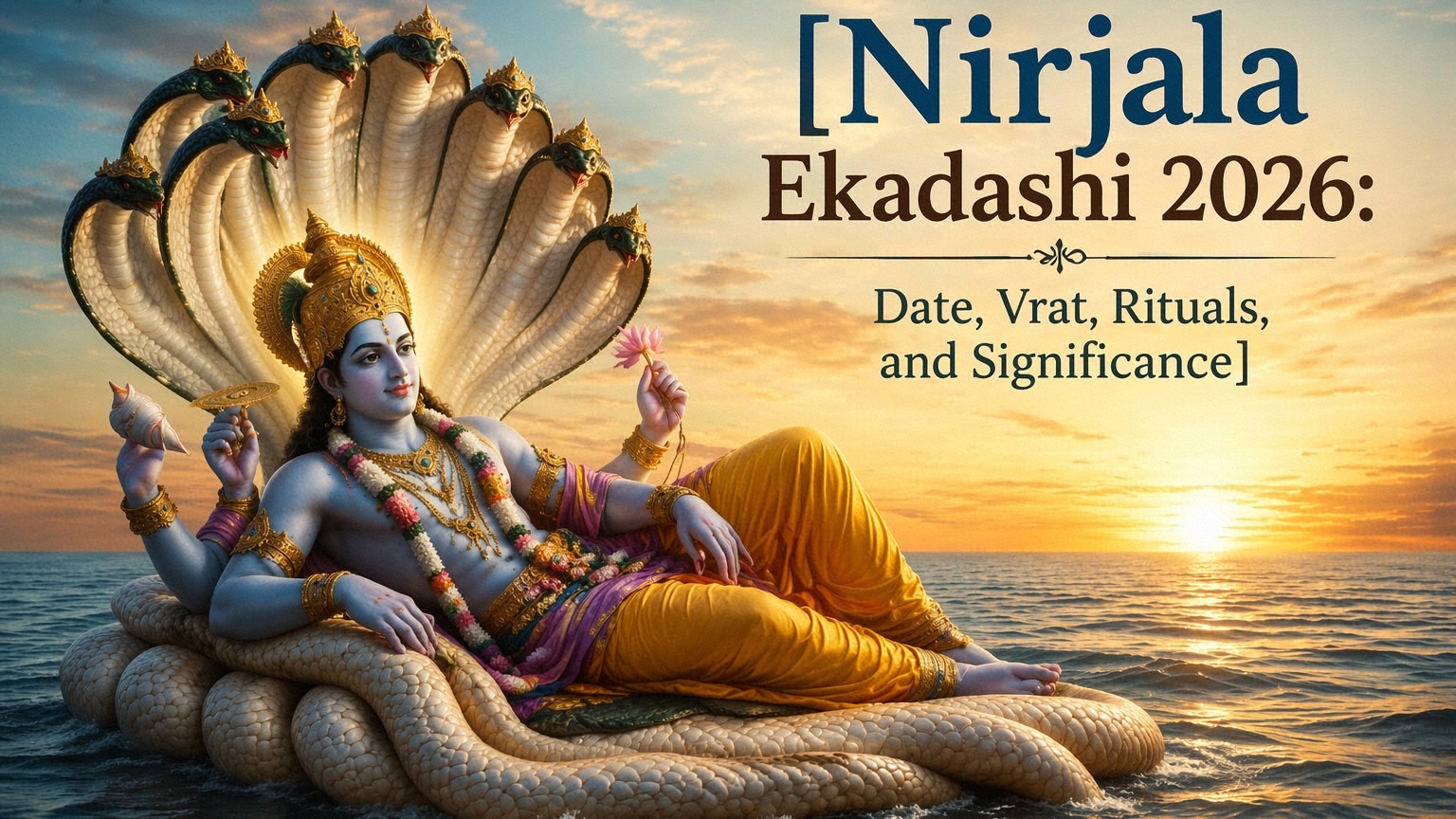
Nirjala Ekadashi is one of the most sacred and powerful fasting days in Hindu tradition. Devotees across India observe this holy vrat with deep faith, believing it brings spiritual peace, blessings, and freedom from past sins. If you are searching for complete details about Nirjala Ekadashi, this guide will help you understand every important aspect in a simple and meaningful way. From fasting rules to the spiritual importance of the day, Nirjala Ekadashi holds a special place among all Ekadashi vrats.
Many devotees consider Nirjala Ekadashi especially important because this vrat is known for its strict fasting practice without water. It is believed that observing this sacred fast with devotion can give the benefits of all twenty-four Ekadashi fasts together. Whether you are planning to keep the vrat for the first time or simply wish to learn more about its traditions, understanding Nirjala Ekadashi can make your spiritual journey more fulfilling and inspiring.
Nirjala Ekadashi 2026: Date
In 2026, Nirjala Ekadashi will be observed on Thursday, June 25, during the Shukla Paksha of the Hindu month of Jyeshtha. This sacred Ekadashi is devoted to Lord Trivikrama, a divine form of Lord Vishnu. Among all Ekadashi fasts, Nirjala Ekadashi is considered one of the strictest and most spiritually rewarding. Devotees believe that observing this vrat with true devotion brings peace, prosperity, and freedom from sins.
Nirjala Ekadashi 2026 falls on June 25, Thursday
1 month and 9 days remaining for the festival
- Ekadashi Tithi Begins: June 24, 6:12 pm
- Ekadashi Tithi Ends: June 25, 8:09 pm
- Parana Time: June 26, 5:44 AM – 8:24 AM
Important Timings On Nirjala Ekadashi 2026
| Event | Date & Time |
| Sunrise | June 25, 2026 – 5:47 AM |
| Sunset | June 25, 2026 – 7:11 PM |
| Ekadashi Tithi Begins | June 24, 2026 – 6:12 PM |
| Ekadashi Tithi Ends | June 25, 2026 – 8:09 PM |
| Hari Vasara End Moment | June 26, 2026 – 2:43 AM |
| Dwadashi End Moment | June 26, 2026 – 10:22 PM |
| Parana Time | June 26, 2026 – 5:47 AM to 8:28 AM |
What is Nirjala Ekadashi?
The term “Nirjala” means “without water.” On this day, devotees keep a strict fast without eating food or drinking water for a full day and night. Nirjala Ekadashi is also known by names like Bhimseni Ekadashi, Pandava Nirjala Ekadashi, and Papanashini Ekadashi.
Hindu scriptures say that observing this vrat with dedication gives the same spiritual rewards as keeping all Ekadashi fasts throughout the year. Devotees worship Lord Vishnu and pray for spiritual growth, happiness, and liberation from worldly troubles.
Nirjala Ekadashi Vrat Katha (Story)
According to the Padma Purana, Sage Ved Vyasa advised the Pandavas to observe the Ekadashi fast for spiritual benefits and a righteous life. Yudhishthira once asked Lord Krishna about the importance of the Ekadashi that comes during the Shukla Paksha of Jyeshtha month. Lord Krishna then asked him to learn its importance from Sage Ved Vyasa.
Ved Vyasa explained that eating food on both Ekadashi days, during Krishna Paksha and Shukla Paksha, should be avoided. He also said that after taking a bath on Dwadashi, devotees should worship Lord Keshava before eating.
Bhimsen then shared his difficulty in keeping regular fasts because of his strong hunger. Unlike his brothers and Draupadi, he found it very hard to stay without food. He requested Sage Vyasa to suggest one special fast that could give the benefits of all Ekadashis.
Sage Vyasa told Bhimsen to observe Nirjala Ekadashi during Jyeshtha Shukla Paksha. He instructed him to avoid both food and water completely, except for Achamana. The fast should begin at sunrise on Ekadashi and continue until sunrise on Dwadashi.
Vyasa Muni further explained that anyone who follows this vrat with faith receives the blessings of all Ekadashi fasts. Worshipping Lord Vishnu, staying awake at night, and donating useful items like clothes, water, umbrellas, food, and beds to the needy are also considered highly beneficial.
Bhimsen followed the instructions sincerely and completed the vrat successfully. Since Bhim observed this difficult fast, the vrat later became famous as Bhimseni Ekadashi.
Significance of Nirjala Ekadashi
Nirjala Ekadashi holds great religious importance among devotees of Lord Vishnu. People believe that observing this sacred fast with full devotion brings blessings, peace, and a long life.
This vrat is especially helpful for those who cannot keep all Ekadashi fasts during the year. Religious beliefs say that Nirjala Ekadashi alone gives the spiritual rewards equal to all twenty-four Ekadashis combined.
The fast is also seen as a way to purify the body and mind. Since devotees avoid even water during the vrat, it teaches self-control, discipline, and deep devotion toward God.
According to Hindu tradition, sincere observance of Nirjala Ekadashi helps devotees move closer to moksha and attain the blessings of Vaikunta, the divine abode of Lord Vishnu.
Who is Lord Trivikrama?
The story of Lord Trivikrama comes from the Bhagavat Purana and Padma Purana. Lord Trivikrama is the giant divine form of Lord Vishnu, who first appeared as Vamana, a young Brahmin boy. This story beautifully explains devotion, humility, and the power of faith.
King Mahabali was a noble and generous ruler who deeply worshipped Lord Vishnu. Over time, his strength and influence became so great that even the gods grew worried. Lord Indra and the celestial beings then prayed to Lord Vishnu for help.
Birth of Vamana
Sage Kashyapa advised his wife Aditi to perform the holy Payovrata to protect their son, Lord Indra. Pleased with her devotion and prayers, Lord Vishnu took birth as Vamana, a small Brahmin child, to restore balance in the universe.
The three strides of Vamana
During a grand yajna performed by King Mahabali, Vamana approached the king and humbly asked for three steps of land. Mahabali immediately agreed, even after realizing that the young boy was none other than Lord Vishnu himself.
Soon, Vamana transformed into a huge cosmic form known as Trivikrama. With his first step, he covered the entire Earth. With the second step, he covered the heavens and the sky.
As there was no place left for the third step, King Mahabali offered his own head with complete devotion. Lord Vishnu then placed his foot on Mahabali’s head and sent him to Patala Loka. From that moment, Vamana became famous as Lord Trivikrama.
Mahabali later requested Lord Vishnu to allow him to visit his people once every year. Lord Vishnu granted this wish, and this yearly return is celebrated as the famous Onam festival in Kerala during the Malayalam month of Chingam.
Rituals of Nirjala Ekadashi
Fasting rules
Nirjala Ekadashi is observed without food and water, making it one of the toughest Ekadashi fasts. The fast starts from the sunrise of Ekadashi and continues until the sunrise of Dwadashi. People who are sick, elderly, or taking medicines may observe a simpler fast, as devotion matters more than strict fasting.
Preparation
The vrat preparations begin on Dashami, the day before Ekadashi. Devotees perform prayers and usually eat only one simple meal before sunset. Rice, grains, and heavy foods are generally avoided.
Worship during the fast
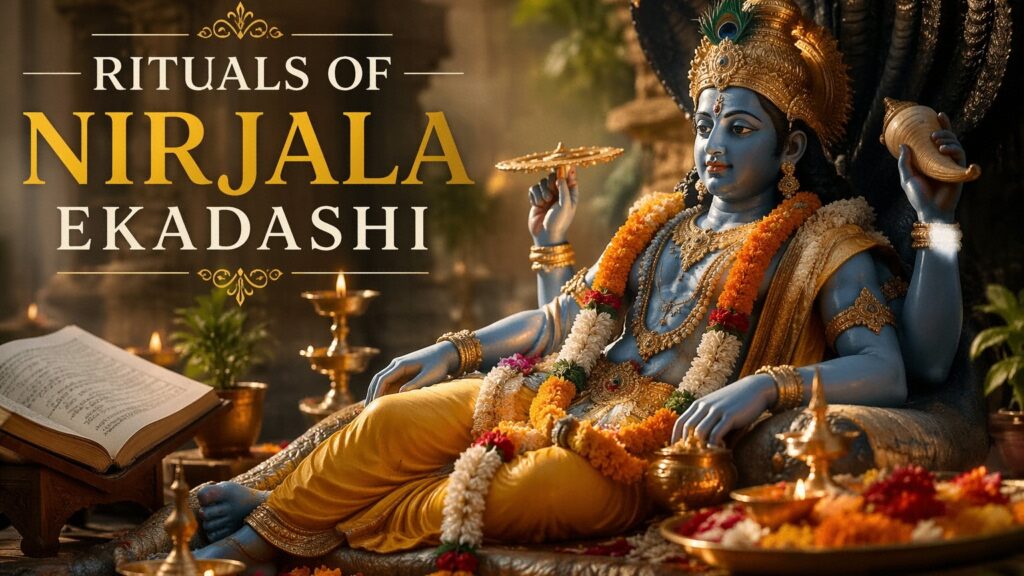
On Nirjala Ekadashi, devotees worship Lord Vishnu with great faith and devotion. The idol or image of the Lord is decorated beautifully, and offerings like tulsi leaves, flowers, fruits, and sweets are presented during the puja.
Night Vigil
Many devotees stay awake throughout the night and spend time singing bhajans or visiting Vishnu temples. Chanting Vishnu Sahasranama and other sacred prayers is considered highly auspicious on this holy occasion.
Charity
Donating food, clothes, water, and other useful items to poor and needy people is seen as very beneficial on Nirjala Ekadashi. Charity performed on this day is believed to bring blessings and spiritual rewards.
Breaking the fast
The fast is completed on Dwadashi after offering prayers to Lord Vishnu. Devotees usually feed Brahmins or offer food in charity before eating and ending the vrat.
Nirjala Ekadashi festival dates between 2020 & 2030
| Year | Date |
| 2020 | Tuesday, 2nd June |
| 2021 | Monday, 21st June |
| 2022 | Friday, 10th June |
| 2023 | Wednesday, 31st May |
| 2024 | Tuesday, 18th June |
| 2025 | Friday, 6th June |
| 2026 | Thursday, 25th June |
| 2027 | Monday, 14th June |
| 2028 | Saturday, 3rd June |
| 2029 | Friday, 22nd June |
| 2030 | Wednesday, 12th June |
FAQs
When is Nirjala Ekadashi 2026 celebrated?
Nirjala Ekadashi 2026 will be observed on Thursday, June 25. Devotees keep this sacred fast to seek the blessings of Lord Vishnu and spiritual peace.
Why is Nirjala Ekadashi considered the most difficult Ekadashi?
Nirjala Ekadashi is known as the strictest Ekadashi because devotees observe the fast without food and water for an entire day and night.
What are the main rituals followed on Nirjala Ekadashi?
On Nirjala Ekadashi, devotees worship Lord Vishnu, chant prayers, observe fasting, stay awake at night, and perform charity for spiritual benefits.
Can elderly or sick people observe Nirjala Ekadashi fast?
Yes, people who are unwell or elderly can observe Nirjala Ekadashi with a partial fast. Hindu beliefs value devotion and sincere prayers more than strict rules.
What are the spiritual benefits of Nirjala Ekadashi?
Nirjala Ekadashi is believed to remove past sins, bring prosperity, and grant the spiritual rewards of observing all Ekadashi fasts in a year.
Conclusion
Nirjala Ekadashi is more than just a fasting day; it is a symbol of faith, devotion, and self-discipline. Devotees across the world observe this sacred vrat to seek the blessings of Lord Vishnu and move closer to spiritual peace. From its powerful vrat katha to its strict fasting rules, every part of Nirjala Ekadashi carries deep religious importance. Observing this holy day with sincerity is believed to bring positivity, prosperity, and inner strength.
As Nirjala Ekadashi 2026 approaches, devotees can prepare themselves spiritually by understanding its rituals, timings, and significance in detail. Whether you are observing the vrat for the first time or continuing a family tradition, this sacred Ekadashi offers a meaningful opportunity to strengthen devotion and practice self-control. The spiritual lessons of Nirjala Ekadashi continue to inspire millions of people every year with its message of faith, sacrifice, and divine blessings.
